
Winter Sports Guide for Back and Spine Health: Stay Safe on the Slopes and Beyond

With winter around the corner, many Durango locals and visitors are gearing up for snow season and outdoor fun. But while winter sports can be exhilarating, they also bring risks, especially to your back and spine. Whether you’re carving down the slopes at Purgatory, shoveling your driveway, or taking a spill on the ice, it’s important to know how to prevent injuries and when to seek medical attention.
At Spine Colorado, we see it all this time of year. Here’s our comprehensive winter wellness guide to help you enjoy the season while protecting your spine.
Common Winter Spine Injuries (and What Causes Them)
Slipping on ice is one of the most common culprits of winter injuries. Even a quick walk across a parking lot can lead to a painful fall. These incidents often cause tailbone bruises, lower back strains, or even herniated discs. It might seem minor at first, but lingering soreness can signal a more significant issue.
Another frequent concern? Snow shoveling. Many patients strain their backs by twisting, lifting heavy snow, or using poor technique. Repeated strain over the course of the winter can exacerbate existing spine issues, especially for those with chronic pain or prior injuries.
On the slopes, landing awkwardly on your tailbone or twisting your hips during a fall can impact your spine due to the strong connection between your hips, pelvis, and lower back. What might feel like a bruised tailbone could actually affect your spinal alignment or even lead to nerve irritation.
If you're experiencing numbness or tingling in your arms or legs after a fall, that could point to nerve compression or irritation. And in rare but serious cases, a spinal injury may affect your bowel or bladder control. If that happens, don’t wait—seek emergency care right away.
Understanding What to Watch For
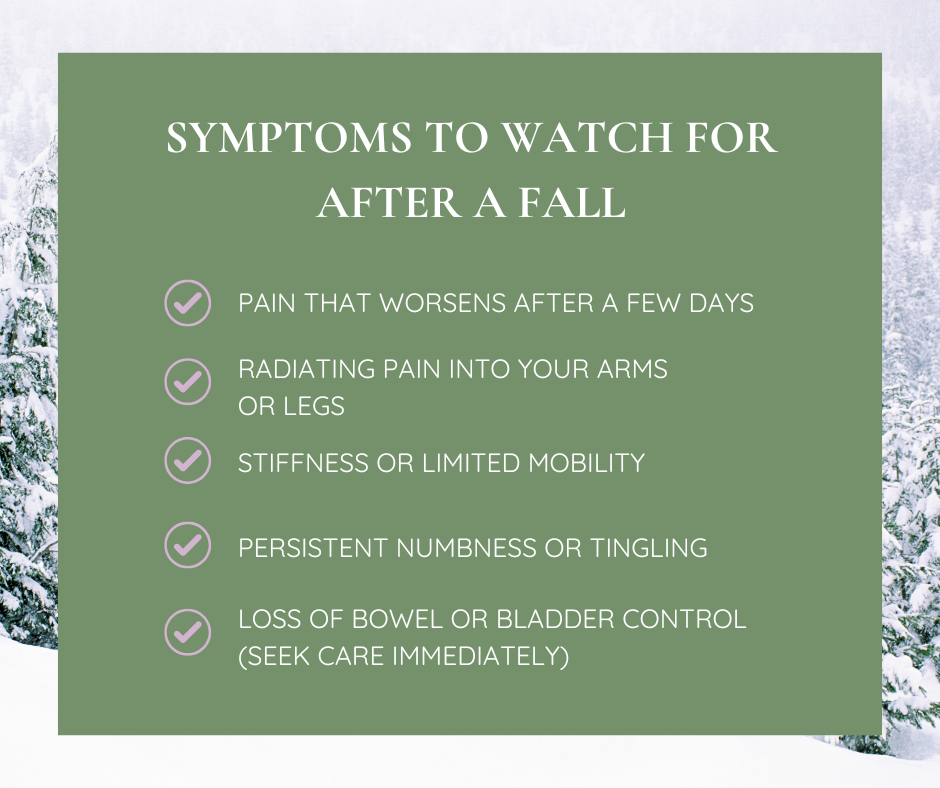
It’s important to distinguish between everyday aches and pains and symptoms that may point to a deeper issue. After a fall, soreness is common and expected. But watch for these signs:
Pain that worsens instead of improves after a few days
Radiating pain down your arms or legs
Stiffness or reduced mobility that limits your ability to move normally
Persistent numbness or tingling in the limbs
Difficulty with bowel or bladder control, which is a medical emergency
Our team often hears from patients who say, "I fell yesterday and I'm really sore today." That kind of call is common during ski season. The challenge is that by the time we can get a patient in, especially during busy times of the year, many of those acute symptoms have resolved. That’s why we encourage patients to think ahead. If your pain is lingering or if you’ve had several falls this season, it may be worth booking an evaluation now, even if the pain isn’t constant. It’s always better to be proactive!
Smart Prevention Tips Before You Hit the Slopes (or Sidewalk)
Winter injuries can often be avoided with preparation. Here are some essential habits to adopt:
Warm up and stretch before activity to prepare your muscles.
Strengthen your core and improve balance to protect your spine.
Start slow and gradually build intensity—especially if it’s your first time out this season.
Use proper shoveling technique by bending your knees and avoiding twisting motions.
Wear traction-enhancing footwear and consider ice cleats to stay upright on slick surfaces.
If you're new to skiing or snowboarding, take a lesson in how to fall correctly. It sounds counterintuitive, but learning to fall can help you avoid dangerous impacts. In fact, in beginner ski classes, one of the first things taught is how to fall safely—because it’s not a matter of if you’ll fall, but when. Falling with bent knees, avoiding reaching your hands out, and keeping your body loose can all reduce the impact on your spine.
Off the slopes, the same advice applies. Taking careful, controlled steps on icy sidewalks, avoiding distractions like your phone, and carrying a small bag of sand or salt in your car can all prevent painful spills.
What to Do If You Fall or Wake Up Sore
A bit of soreness after a day on the mountain or a minor fall is normal. In most cases, simple at-home remedies are enough:
Try alternating ice and heat packs to reduce inflammation and stiffness. Over-the-counter medications like Tylenol or ibuprofen can help with discomfort, and a soak in a hot tub or warm bath may ease muscle tension. Massage therapy can also provide relief for minor injuries.
You should also take note of how long the pain lasts. If your soreness improves within 24 to 48 hours, it’s likely nothing serious. But if your pain lingers for a week or more, or if you notice symptoms getting worse over time, it may indicate an underlying issue that needs professional evaluation.
We understand that symptoms often improve before your scheduled visit, but if you're still hurting after a week or two, don’t tough it out. The sooner we can assess the injury, the better chance we have of resolving it with conservative care.
We also recommend tracking your symptoms using a journal or a smartphone app. Logging when pain occurs, how intense it is, and what activities make it worse can help us create a more accurate and personalized treatment plan.
How Spine Colorado Can Help
We treat many winter-related spine issues right here in Durango. Our team offers fast diagnostic services, including in-office imaging, to get to the root of your pain quickly. We start with conservative treatments such as physical therapy, guided exercise, and targeted injections. In fact, over 90% of our patients find relief without surgery.
Our approach is rooted in collaboration. Physical medicine and rehabilitation specialists work alongside orthopedic spine surgeons and therapists to ensure each patient receives a personalized plan. That might include spinal injections, shockwave therapy for chronic back and neck pain, or simply guidance on posture and movement that can prevent future flare-ups.
For those who need more advanced care, our fellowship-trained orthopedic spine surgeons offer minimally invasive procedures with a focus on faster recovery and long-term success. You won’t need to travel far or juggle multiple appointments across different facilities. Everything you need is right here under one roof.
And for patients with chronic conditions, like those who have lived with back pain for years, we can help differentiate between acute injuries and long-standing issues that may require a different treatment path. Whether you're 25 or 75, our goal is the same: to help you move comfortably and confidently through the season.
A Final Word of Encouragement
Winter in Durango is magical, and it should be enjoyed without fear. A fall doesn’t always mean a serious injury—sometimes, it's just a bruise or temporary soreness. But knowing the difference between normal pain and something more serious is key to staying healthy.
Your spine is your foundation, and when it’s hurting, everything else becomes more difficult. But with a little preparation, smart prevention, and the right care team behind you, there’s no reason back pain has to keep you from enjoying the best the season has to offer.
So lace up your boots, grab your gear, and get out there. Just remember: your spine deserves as much preparation and care as your skis.
And if your back starts acting up? We’re here to help you bounce back. Contact Spine Colorado to schedule an evaluation today.